



My time in Prince Rupert as an Action Canada Fellow was truly eye-opening. Nestled on the northwestern coast of British Columbia, this small city is rich in history and embodies the complexities of life in a northern community. Its breathtaking natural beauty – rugged coastlines and dense forests – serves as a powerful reminder of the profound connection between people and the land. Yet, this peace coexists with the struggles many resource-dependent communities face in Canada, where the quest for sustainability and economic viability is ever-present.
A key part of Prince Rupert’s identity lies in its rich Indigenous heritage. We had the opportunity to hear from Ryan Leighton, COO of the Metlakatla First Nation’s Development Corporation. His commitment to Indigenous-led resource development and his focus on community stewardship while navigating corporate partnerships really struck a chord with me. Similarly, the Haisla Nation in nearby Kitamaat Village is shaping its own future on its own terms. The Cedar LNG project is a great example, with revenues going straight back into vital areas like healthcare and youth programs that directly benefit the community.
Haisla Nation Chief Councillor Crystal Smith delivered a powerful Lecture on Reconciliation, sharing a compelling vision of balancing resource development with sustainability. Listening to her made me rethink the role – and art – of economic reconciliation in the larger picture of healing and progress, emphasizing the necessity to see Indigenous peoples as equal partners and decisionmakers in shaping Canada’s future. This collaborative spirit is mirrored in the partnership between Mayor Phil Germuth of the District of Kitimat and Chief Smith. Since March 2022, they have worked together on equitable economic development, culminating in a friendship agreement this summer – a testament to the impact a few committed individuals can have on their communities.


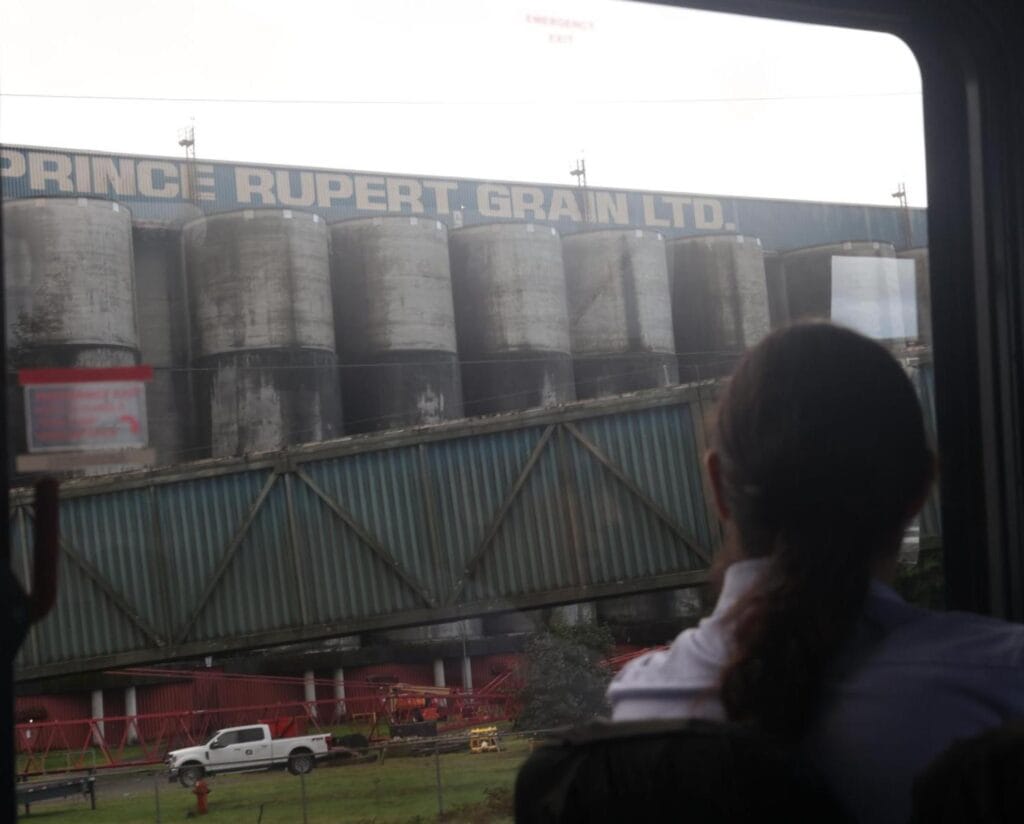
A highlight of our visit was a walking tour with local historian and former City Councillor Blair Mirau. We delved into Prince Rupert’s past, shaped by industries like fishing and forestry, including the rise and fall of the pulp mill industry – a painful chapter that speaks to the city’s resilience. Today, Prince Rupert is pushing forward with projects like the port expansion and attracting new industries, including cruise liners. However, it’s not all optimism. Joy Thorkelson, past President of the United Fishermen and Allied Workers Union, highlighted the struggles from the closure of canneries and the consolidation of processing plants offshore, significantly affecting local workers and traditional ways of life. These challenges underscore the complexity of federal and provincial policymaking, especially in smaller, remote communities
As we explored the region, I couldn’t help but reflect on the broader implications of the resource sector. Passing by Rio Tinto’s aluminum smelter and the LNG Canada terminal in Kitimat illustrated how deeply these industries shape local lives, providing jobs and livelihoods – dignity. Yet, this reality also sheds light on the complexities we face; risks to natural life and community sustainability demand careful consideration.
What resonated most during the tour was how human-centered leadership is at the heart of everything here. True leadership isn’t about grand gestures; it’s about the small, meaningful efforts that create lasting change. Whether it’s Chief Smith’s vision for the Haisla Nation, Ryan’s commitment to community above self, or Joy’s advocacy for fisheries workers, the strength of relationships, clarity of vision, and collaboration in Prince Rupert and beyond truly stood out.

Reflecting on this experience, I realized just how interconnected Canada’s natural resources, public policies, and people are. Though geographically distant from major urban centers, the lessons from small-city Prince Rupert – on resilience, reconciliation, and leadership – are anything but peripheral; they’re universal. It captures Canada’s beauty and complexity – its strengths, challenges, and the ongoing journey toward a more inclusive and sustainable future. This experience has deepened my understanding of what it means to lead with empathy and a focus on community, lessons I’ll carry forward in my work in public service.
