

Where Sovereignty Meets Story: Lessons from Québec
“How was it?” my fiancé asked when I returned home to Toronto after the first Action Canada study tour.
“Transformational,” I replied.
From June 15th to 20th, the 2026-2027 Action Canada cohort began our fellowship in Québec City, exploring the province’s unique perspective on this year’s theme: Northern sovereignty. Over the week, we engaged with diverse stakeholders and rightsholders to better understand Québec’s political, cultural, and economic landscape, and its connection to the North.
When I stepped onto the plane which would take myself and other Action Canada Fellows from Toronto Pearson Airport to Québec City, I did not know what to expect. Questions swirled in my head such as, “How will our cohort react to the topics we engage with over the week?” “How will we react to each other?” and “How can I be successful in this experience?”
What became surprising throughout the week was how, as leaders, we might try to measure success through various metrics such as, how much money was made from an initiative, how many people were connected to a new idea, or how many outputs came from a single convening. But what I started to realize throughout the week was how leadership should be measured by one qualitative-based question: how transformed were people through an initiative?
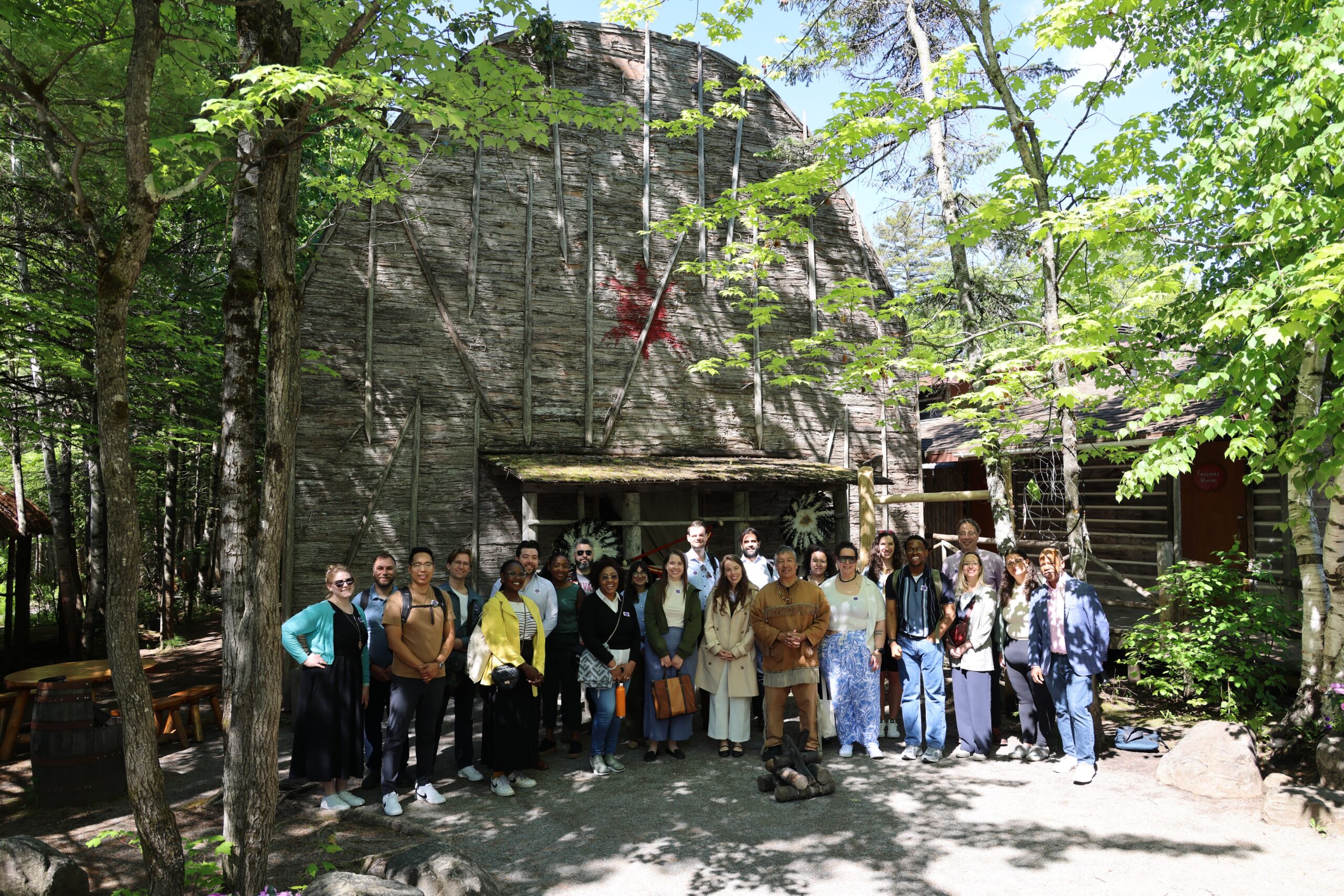
Change became a focal point from the beginning of the week. Our cohort’s first stop was Wendake, the Huron-Wendat Nation. There, we learned about life on an urban reserve and visited a reconstructed traditional site before heading to the Hôtel-Musée Premières Nations. The Hôtel-Musée exemplified innovation rooted in culture: a high-profile hotel and museum developed to sustain and reflect Wendake’s heritage. The story of Hôtel-Musée was incredible, showing how a community’s determination and vision to grow their environment resulted in a space which stands as a testament to what can be built when resilience and identity are centered.
Later, we explored Québec’s political history, including sovereignty and separation movements following the Quiet Revolution. These discussions resonated strongly, particularly for fellows from Alberta (including myself as the province I was raised in) navigating similar conversations today where the question of sovereignty is being used in an extreme form through a separation referendum. In this moment, I thought about how sovereignty is used as a tool to change communities for the better but can also be poised to tear some communities apart. This way in which sovereignty is a tool which is wielded led to an important question from our cohort: where do Indigenous communities—especially Inuit in Northern Québec—fit into separatism debates? How does evolution of a political space include diverse communities who might not be represented at the decision-making table?
In response, there was a lack of a clear answer. This moment highlighted to me a critical lesson: sovereignty discussions that exclude key voices, particularly from Indigenous communities, risk failure. For meaningful progress, all perspectives must be included for sovereignty to be a tool of strengthening communities, rather than forcing them apart. Because progress requires us all to transform by bringing together our different views and perspectives through dialogue.
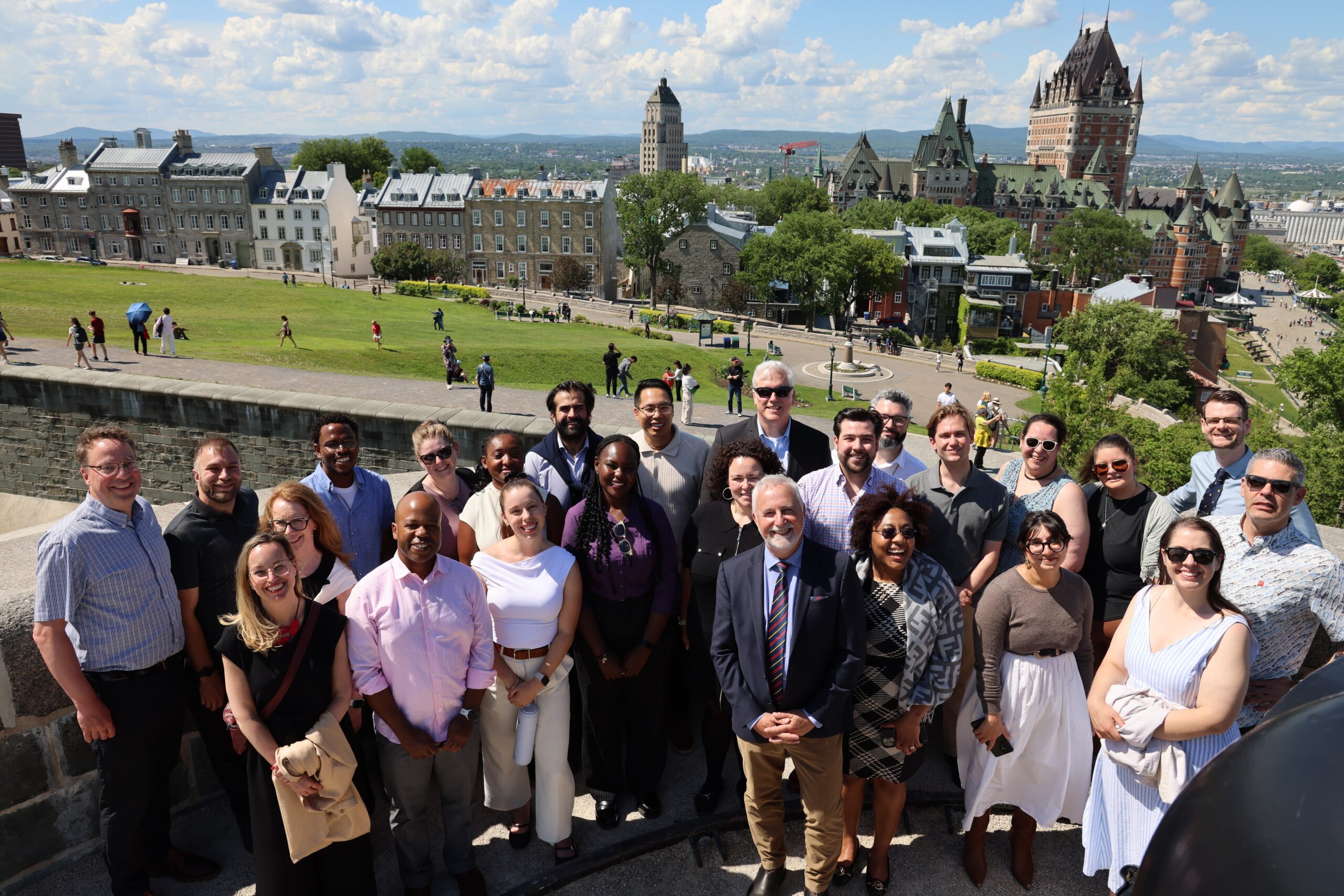
The next day we visited the Citadelle of Québec and were introduced to a traditional view of sovereignty through the lens of national security. As a cohort, we were challenged to see crises as opportunities to rethink public policy. A crisis can serve to freshen perspectives previously held and develop new frameworks which better reflect the needs of the full Canadian population. We were asked to consider what possibilities might emerge for Canada’s North in light of geopolitics? We circulated ideas which reflected urgency, optimism, and a capacity to catalyze on the fear of crises and change this into action for a better tomorrow.
What became clear is how sovereignty discussions are really opportunities to rethink transformation for a country. However, what stuck with me throughout the week was how sovereignty means different things to different communities, shaped by distinct histories and aspirations.
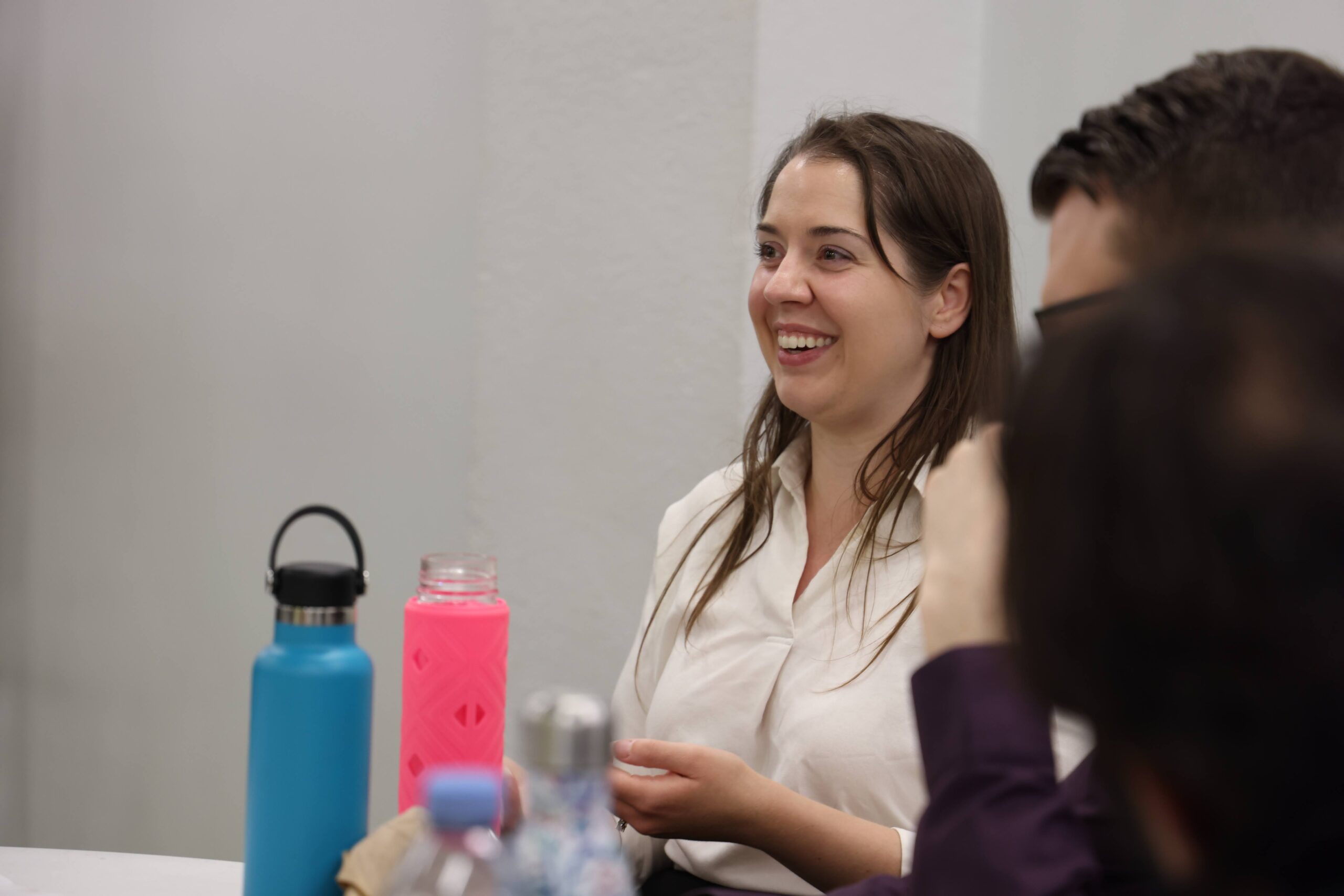
As we returned home, we carried more than notes and reflections; we carried this transformation. Québec challenged our assumptions, broadened our perspectives, and reminded us that sovereignty, in all its forms, is ultimately about people. And with that insight, we now look ahead to Whitehorse.